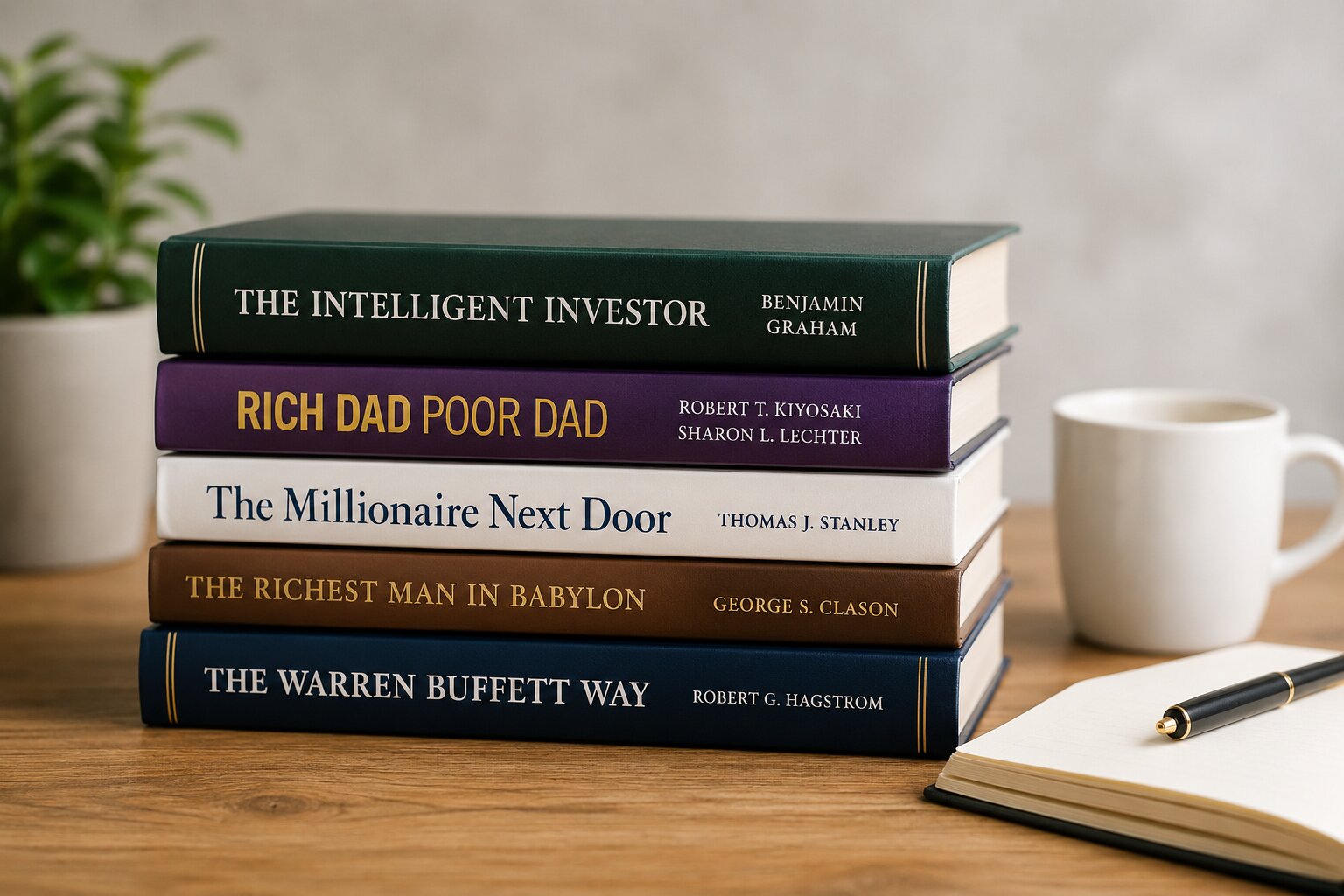
Financial literacy is the foundation of successful investing. Whether you're buying your first stock or building a long-term portfolio, understanding key financial principles can help you make better decisions and avoid costly mistakes.
One of the best ways to improve your financial knowledge is by reading books written by experienced investors and financial experts. In this guide, we'll explore five of the best books for investors that offer timeless lessons on investing, wealth creation, and financial discipline.
5 Best Books for Investors
Here are five books every investor should consider reading.
1. The Intelligent Investor by Benjamin Graham
Overview
Written by legendary investor Benjamin Graham, The Intelligent Investor is widely regarded as the bible of value investing. First published in 1949, it continues to influence investors around the world, including Warren Buffett.
Key concepts and lessons
Mr. Market
Graham introduces the fictional character "Mr. Market" to explain how stock prices often fluctuate because of emotions rather than business fundamentals. Investors should stay rational and avoid reacting to short-term market movements.
Margin of safety
One of the book's most famous concepts is the margin of safety. Buying stocks below their intrinsic value provides a cushion against unexpected losses and reduces investment risk.
Fundamental analysis
The book stresses evaluating a company's financial health, profitability, management quality, and competitive advantages before investing.
Why every investor should read it
This classic teaches the principles of value investing, risk management, and disciplined decision-making that remain relevant decades after its publication.
2. Rich Dad Poor Dad by Robert Kiyosaki and Sharon Lechter
Overview
Rich Dad Poor Dad compares the financial philosophies of two father figures to challenge conventional beliefs about money, careers, and wealth creation.
Key concepts and lessons
Financial education
The book highlights the importance of continuously improving financial knowledge instead of relying solely on formal education.
Assets vs. liabilities
One of its biggest lessons is understanding the difference between assets that generate income and liabilities that consume money.
Passive income
The authors encourage building multiple streams of passive income through investments, businesses, and real estate to achieve financial independence.
Why every investor should read it
This book changes how readers think about money and encourages investing for long-term financial freedom rather than simply earning a salary.
3. The Millionaire Next Door by Thomas J. Stanley
Overview
Based on extensive research, The Millionaire Next Door examines the habits and lifestyles of self-made millionaires in the United States.
Key concepts and lessons
Living below your means
The book shows that many wealthy individuals spend less than they earn and avoid unnecessary lifestyle inflation.
Consistent saving and investing
Building wealth requires saving regularly and investing consistently over long periods.
Millionaire mindset
The authors demonstrate that discipline, patience, and smart financial habits matter far more than a high income.
Why every investor should read it
It offers a realistic perspective on wealth creation and proves that financial success often comes from discipline rather than extravagance.
4. The Richest Man in Babylon by George S. Clason
Overview
This timeless classic presents financial wisdom through engaging parables set in ancient Babylon.
Key concepts and lessons
Pay yourself first
Always save a portion of your income before spending on anything else.
Power of compounding
Regular saving and investing allow compound growth to significantly increase wealth over time.
Seek wise advice
Learning from experienced investors and financial experts helps avoid costly mistakes.
Why every investor should read it
Its simple storytelling makes complex financial principles easy to understand while teaching habits that remain relevant today.
5. The Warren Buffett Way by Robert G. Hagstrom
Overview
This book explores Warren Buffett's investing philosophy and explains how he evaluates businesses before making investment decisions.
Key concepts and lessons
Value investing
The book explains Buffett's strategy of buying outstanding businesses at reasonable prices.
Long-term investing
Patience and a long investment horizon are essential for generating superior returns.
Financial analysis
Investors should carefully analyse a company's financial statements, competitive advantages, and long-term prospects before investing.
Why every investor should read it
It provides valuable insights into stock selection, portfolio management, and the investing principles followed by one of the world's most successful investors.
Final thoughts
Reading great investing books is one of the smartest investments you can make in yourself. While markets change over time, the principles of disciplined investing, risk management, patience, and continuous learning remain constant.
Whether you're a beginner or an experienced investor, these five books can help strengthen your financial knowledge and improve your long-term investment decisions.